India's
recorded civilization is one of the longest in the course of world history and
its mythology spans the whole of that time and more. For some periods, indeed,
since Hindu scholarship traditionally has little interest in history as such,
mythology and sacred lore constitute the sole record, and the changes that may
be noted in such traditional materials are thus vital clues to our knowledge of
social and political change. Further-more the mythology is distinguished from
that of most other lands, and certainly those of the West, by the fact that it
is still part of the living culture of every level of society.
 The
Indians have always tended to retain their early beliefs and mould them
sometimes perhaps distorting them in such a way as to mirror new social
conditions, to adapt to the customs or beliefs of new rulers, or to fit into a
new philosophical scheme. Over the millennia invaders with superior military
techniques have entered the subcontinent in a steady stream, mostly from the
north-west, and with the exception of the Muslims from the eleventh century
onwards have been assimilated into but at the same time have influenced the
more advanced and deep-rooted culture of the peoples they conquered. Deities
and the myths attached to them have thus multiplied. The major synthesis of the
Aryan or Vedic gods and the native Dravidian deities took shape as the roots of
Hinduism. Because this happened under the guidance of the hereditary class of
priests and philosophers, the Brahmins, it reinforced the status of the
priests, stressing the value of their prerogative, the performance of
sacrifice, in men's relations with the gods.
The
Indians have always tended to retain their early beliefs and mould them
sometimes perhaps distorting them in such a way as to mirror new social
conditions, to adapt to the customs or beliefs of new rulers, or to fit into a
new philosophical scheme. Over the millennia invaders with superior military
techniques have entered the subcontinent in a steady stream, mostly from the
north-west, and with the exception of the Muslims from the eleventh century
onwards have been assimilated into but at the same time have influenced the
more advanced and deep-rooted culture of the peoples they conquered. Deities
and the myths attached to them have thus multiplied. The major synthesis of the
Aryan or Vedic gods and the native Dravidian deities took shape as the roots of
Hinduism. Because this happened under the guidance of the hereditary class of
priests and philosophers, the Brahmins, it reinforced the status of the
priests, stressing the value of their prerogative, the performance of
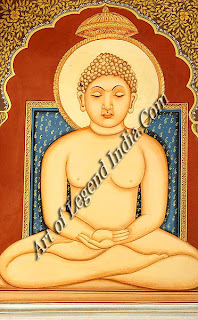
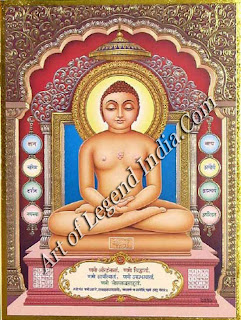
sacrifice, in men's relations with the gods.  Buddhism
was a reform movement rejecting some of the extremes of the Brahmins' doctrine
and practice. It arose in the fifth century B.C. and held sway among the
educated and powerful in northern India from the time of the Maurya emperor
Ashoka in the third century B.C. until its waning in India in the seventh
century A.D. Though Buddhism and the parallel movement of Jainism were
originally ethical systems whereby the individual through personal effort could
attain union with a universal Absolute beyond all gods, in time they too
acquired mythology and borrowed some of the Hindu and pre-Aryan deities. This
in turn affected classical Hindu mythology and Hindu philosophy of the Golden
Age under the Guptas (fourth to sixth centuries A.D.), which was in part a
defensive reaction to Buddhism. By the ninth century A.D. Hinduism was showing
a tendency to monotheism by putting far greater emphasis on Shiva and Vishnu as
high gods of universal cosmic significance, with worship by bhakti (devotion to
a personal god) rather than by sacrifice performed by priests. After some two
and a half millennia as prime intermediaries with the gods, however, the
priestly caste was by then secure in its preeminence.
Buddhism
was a reform movement rejecting some of the extremes of the Brahmins' doctrine
and practice. It arose in the fifth century B.C. and held sway among the
educated and powerful in northern India from the time of the Maurya emperor
Ashoka in the third century B.C. until its waning in India in the seventh
century A.D. Though Buddhism and the parallel movement of Jainism were
originally ethical systems whereby the individual through personal effort could
attain union with a universal Absolute beyond all gods, in time they too
acquired mythology and borrowed some of the Hindu and pre-Aryan deities. This
in turn affected classical Hindu mythology and Hindu philosophy of the Golden
Age under the Guptas (fourth to sixth centuries A.D.), which was in part a
defensive reaction to Buddhism. By the ninth century A.D. Hinduism was showing
a tendency to monotheism by putting far greater emphasis on Shiva and Vishnu as
high gods of universal cosmic significance, with worship by bhakti (devotion to
a personal god) rather than by sacrifice performed by priests. After some two
and a half millennia as prime intermediaries with the gods, however, the
priestly caste was by then secure in its preeminence.  At
times the influence exerted by the priesthood in India has succeeded, at least
among the educated, in trans-forming the pattern of beliefs. In some cases the
changes advocated were no more than a response to the natural evolution of
India's mythology as a consequence of historical circumstances: dynastic
changes, invasions, economic conditions and the resultant social setting of the
Indian peoples. Thus, for example, the name`asura', originally applied to Aryan
deities such as Varuna, came by the Brahmanic age to refer to demons, albeit
powerful ones. Such changes were particularly apt to alter mythological
beliefs, for Indian myths as well as the religions around which they have grown
up are closely tied to the social structure. It may be said that this is true
of all mythologies but Indian mythology, through its persistence beyond the
primitive levels of civilization and into a highly developed and stratified
culture, has been able, for instance, to reinforce the doctrines of caste, so
that even government disapproval cannot banish it from society.
At
times the influence exerted by the priesthood in India has succeeded, at least
among the educated, in trans-forming the pattern of beliefs. In some cases the
changes advocated were no more than a response to the natural evolution of
India's mythology as a consequence of historical circumstances: dynastic
changes, invasions, economic conditions and the resultant social setting of the
Indian peoples. Thus, for example, the name`asura', originally applied to Aryan
deities such as Varuna, came by the Brahmanic age to refer to demons, albeit
powerful ones. Such changes were particularly apt to alter mythological
beliefs, for Indian myths as well as the religions around which they have grown
up are closely tied to the social structure. It may be said that this is true
of all mythologies but Indian mythology, through its persistence beyond the
primitive levels of civilization and into a highly developed and stratified
culture, has been able, for instance, to reinforce the doctrines of caste, so
that even government disapproval cannot banish it from society.
Caste
was first evolved in the late Epic or Brahmanic age, about 800-550 B.C., as the
Aryans expanded over northern India and found it necessary to integrate
majority indigenous populations into their social framework, and it seems from
evidence in the great epics composed in that period that at first change of
caste was possible. The rigidity and complexity of the caste structure as it
developed later seems almost entirely due to Brahmin influence, and through it
Brahmins maintained by right of birth a position as the highest caste. Not all
Brahmins at any time were priests, but nevertheless Brahmin-imposed doctrine
held that each Brahmin had to maintain the purity of the caste as a whole, and
contact with the lower castes, especially as regards food, might pollute and
was strictly regulated.
 In
asserting their own status as exclusive repositories of the sacred, and
specifically oral, Vedic traditions that they recited, and as masters of ritual
and sacrifice, sole intermediaries with the gods, Brahmins claimed the right to
respect and to alms. They distanced themselves from the lower castes by
defining the others' functions and duties. Thus the Kshatriya caste among whom
were kings and warriors had the duty of ruling by maintaining efficient and
just administration, conducting warfare to expand and defend the state, and
contracting external alliances; the Vaisya (merchant and artisan) caste had a
duty to further the economic life of society; while the Sudra (peasant or
cultivator) caste was set apart as the lowest caste since its members were not
considered 'twice-born', could not be initiated and so wear the sacred thread,
and were forbidden to study or teach the Vedas, their only permissible contact
with the other castes being as servants. Beyond the castes were the outcastes,
who under-took the menial 'unclean' tasks that polluted the individual; and
beyond all these were the Dravidian aborigines with their tribal gods, who in the
Vedic and Epic ages, until about 600 B.C., were by far the most numerous in the
subcontinent as a whole.
In
asserting their own status as exclusive repositories of the sacred, and
specifically oral, Vedic traditions that they recited, and as masters of ritual
and sacrifice, sole intermediaries with the gods, Brahmins claimed the right to
respect and to alms. They distanced themselves from the lower castes by
defining the others' functions and duties. Thus the Kshatriya caste among whom
were kings and warriors had the duty of ruling by maintaining efficient and
just administration, conducting warfare to expand and defend the state, and
contracting external alliances; the Vaisya (merchant and artisan) caste had a
duty to further the economic life of society; while the Sudra (peasant or
cultivator) caste was set apart as the lowest caste since its members were not
considered 'twice-born', could not be initiated and so wear the sacred thread,
and were forbidden to study or teach the Vedas, their only permissible contact
with the other castes being as servants. Beyond the castes were the outcastes,
who under-took the menial 'unclean' tasks that polluted the individual; and
beyond all these were the Dravidian aborigines with their tribal gods, who in the
Vedic and Epic ages, until about 600 B.C., were by far the most numerous in the
subcontinent as a whole.
Others
of the priests' innovations were inspired by philosophical developments
understood only by the few in general only the priests them-selves but
affecting all. Just as in other cultures, such as those of the ancient Near
East and Egypt, where mythology began by explaining natural phenomena, then
served to bolster the status of the ruler, and finally be-came a symbolic
language expressing the ideas of philosphers, so in India the esoteric cults
treated the great body of accumulated myths as a source of symbols with which
to ex-press philosophical ideas. Inevitably the myths themselves were sometimes
moulded to conform to the ideas that they were made to represent.
 Changes
in the social and philosophical backgrounds may be termed the natural causes of
mythological evolution. They were not the only factors; less openly admitted
but of equal importance were the various efforts on the part of the priests to
maintain their own power and influence with the masses by accepting their more
primitive beliefs and dei-ties and weaving them into the new system by means of
myth. Equally the Brahmins consolidated their position of trust with rulers by
securing the allegiance of the people throughout the period when Buddhism was
the faith of the educated and powerful, and when a succession of dynasties,
some foreign, dominated northern and central India (roughly ZOO B.C. to A.D.
800). By the twelfth century the last remaining centres of Buddhist teaching,
the monasteries of Bengal and Bihar in eastern India which had enjoyed the
patronage of the Pala dynasty of the eighth to twelfth centuries, had declined.
With the Turkish Muslim conquest of eastern India soon after f zoo, Buddhism
was con-fined to peripheral countries such as Nepal, Tibet, Assam, Burma, Sri
Lanka and South-East Asia. (A resurgence of interest in Buddhism in its native
India did not occur till the twentieth century, largely among those considered Untouchables
by Hindus.)
Changes
in the social and philosophical backgrounds may be termed the natural causes of
mythological evolution. They were not the only factors; less openly admitted
but of equal importance were the various efforts on the part of the priests to
maintain their own power and influence with the masses by accepting their more
primitive beliefs and dei-ties and weaving them into the new system by means of
myth. Equally the Brahmins consolidated their position of trust with rulers by
securing the allegiance of the people throughout the period when Buddhism was
the faith of the educated and powerful, and when a succession of dynasties,
some foreign, dominated northern and central India (roughly ZOO B.C. to A.D.
800). By the twelfth century the last remaining centres of Buddhist teaching,
the monasteries of Bengal and Bihar in eastern India which had enjoyed the
patronage of the Pala dynasty of the eighth to twelfth centuries, had declined.
With the Turkish Muslim conquest of eastern India soon after f zoo, Buddhism
was con-fined to peripheral countries such as Nepal, Tibet, Assam, Burma, Sri
Lanka and South-East Asia. (A resurgence of interest in Buddhism in its native
India did not occur till the twentieth century, largely among those considered Untouchables
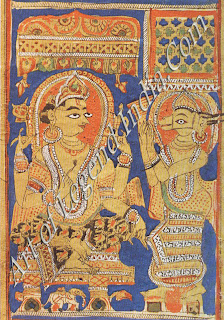
by Hindus.)  Muslim
incursions into northern India had begun in the early eleventh century and
Mahmud of Ghazni ordered the destruction of Hindu and Jain temple art. Although
effective Muslim rule was not to come until the early thirteenth century and
many shrines were rebuilt, enormous dam-age was done. Nevertheless Hindu
traditions, with the appeal of syncretistic deities, were well enough
established thanks to the Brahmins to survive both in the north and in the
south of India, where Muslim influence reached only much later. Jainism
survived too, largely in Gujerat and southern Rajasthan, where its appeal was
to artisans and to wealthy mercants with the means to patronise it generously;
where necessary it became an underground cult whose artists, turning to easily
concealed manuscript painting, maintained iconographic traditions despite
Muslim rule. Paradoxically Muslim persecution also prompted Hindus to set down
their scriptural traditions in more permanent form. Whereas before they had valued
and relied chiefly on oral tradition a factor which in itself encouraged the
proliferation of mythology now they set down the scriptures in illustrated
manuscripts. The language used was Sanskrit, the classical Aryan language of
the Brahmins (whereas Buddhist texts were also written in a range of vernacular
languages). This reinforced the myths contained within the scriptures.
Muslim
incursions into northern India had begun in the early eleventh century and
Mahmud of Ghazni ordered the destruction of Hindu and Jain temple art. Although
effective Muslim rule was not to come until the early thirteenth century and
many shrines were rebuilt, enormous dam-age was done. Nevertheless Hindu
traditions, with the appeal of syncretistic deities, were well enough
established thanks to the Brahmins to survive both in the north and in the
south of India, where Muslim influence reached only much later. Jainism
survived too, largely in Gujerat and southern Rajasthan, where its appeal was
to artisans and to wealthy mercants with the means to patronise it generously;
where necessary it became an underground cult whose artists, turning to easily
concealed manuscript painting, maintained iconographic traditions despite
Muslim rule. Paradoxically Muslim persecution also prompted Hindus to set down
their scriptural traditions in more permanent form. Whereas before they had valued
and relied chiefly on oral tradition a factor which in itself encouraged the
proliferation of mythology now they set down the scriptures in illustrated
manuscripts. The language used was Sanskrit, the classical Aryan language of
the Brahmins (whereas Buddhist texts were also written in a range of vernacular
languages). This reinforced the myths contained within the scriptures.
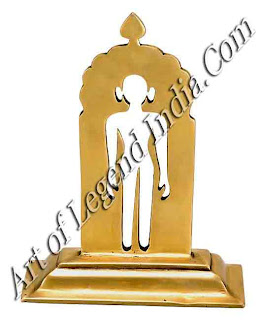
That no
one trend was completely dominant is attested by the extreme complexity of
Hindu mythology as it exists today, and even more by the numerous
contradictions and inconsistencies in the stories concerning practically every
deity in the Indian pantheon. There is also a thread of overt anti-Brahmanism
that runs through some myths. It mirrors the reaction voiced in the Upanishads
of the fifth century B.C. and brought to a head by the reform movements of
Buddhism and Jainism against the self-proclaimed superior position of Brahmins,
against caste, deities, ritual, sacrifice, and the doctrine which the Brahmins
put forward of samsara, the transmigration of souls, implying endless rebirth
into a harsh life. Instead of a religious life based on sacrifice that sought
riches, health and long life from the divine power, asceticism or meditation
was advocated, with the aim of detachment from the illusions of worldly life
and union with the cosmic spirit.
 Some of
the contradictions and in part the great differences that today exist between
the beliefs held by the educated and the common people may be traced to the
overcomplicated systems evolved. Some of these differences could not be bridged
by mythological ingenuity. The philosophical preoccupations of the Brahmins
with the growing intricacies of their rituals, and on the other hand the heroic
austerities of sages who relied on discipline, not the support of the gods, led
to the exclusion of the common people, who were thus thrown back in some cases
on earlier beliefs, whose attendant ritual had more bearing on their own lives.
There are in India innumerable deities of purely local significance alongside
the great gods. Often they are closely identified with a specific tract of
land, its soil and the life it sustains. Some-times they are worshipped only in
a particular village, or even by a section only of the village, or as domestic
gods. The priests of these village dei-ties are commonly non-Brahmins, and they
may prepare themselves for their priestly role not by purification or
scriptural learning but by trance or possession, thus harking back to the
intoxication sought by early Aryan priests from soma. Their function may often
be to cast out evil spirits causing sickness or misfortune from the sufferer
and transfer them to the deity. Needless to say, myths that may have grown up
about such local deities cannot be covered in a general work. But in fact,
since the position of these local deities is unchallenged by the status of the
great gods of the Hindu pantheon, there has not been the spur to the
elaboration of a mythology to defend them against rival claims of other deities
or to adapt to a changing social order, which is often the background to
developed myths about the major gods.
Some of
the contradictions and in part the great differences that today exist between
the beliefs held by the educated and the common people may be traced to the
overcomplicated systems evolved. Some of these differences could not be bridged
by mythological ingenuity. The philosophical preoccupations of the Brahmins
with the growing intricacies of their rituals, and on the other hand the heroic
austerities of sages who relied on discipline, not the support of the gods, led
to the exclusion of the common people, who were thus thrown back in some cases
on earlier beliefs, whose attendant ritual had more bearing on their own lives.
There are in India innumerable deities of purely local significance alongside
the great gods. Often they are closely identified with a specific tract of
land, its soil and the life it sustains. Some-times they are worshipped only in
a particular village, or even by a section only of the village, or as domestic
gods. The priests of these village dei-ties are commonly non-Brahmins, and they
may prepare themselves for their priestly role not by purification or
scriptural learning but by trance or possession, thus harking back to the
intoxication sought by early Aryan priests from soma. Their function may often
be to cast out evil spirits causing sickness or misfortune from the sufferer
and transfer them to the deity. Needless to say, myths that may have grown up
about such local deities cannot be covered in a general work. But in fact,
since the position of these local deities is unchallenged by the status of the
great gods of the Hindu pantheon, there has not been the spur to the
elaboration of a mythology to defend them against rival claims of other deities
or to adapt to a changing social order, which is often the background to
developed myths about the major gods. 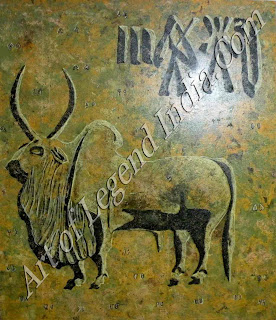 As for
the major gods, the people came to accept new introductions by identifying them
with old gods, and thus reconciling all beliefs. This trend was helped by the
evolving ideas of the Brahmins. The idea of reincarnation, which was unknown to
the Aryan invaders and is never mentioned in the Vedas, appeared about the year
700 B.C. and was developed to the point where any deity, hero, spirit or human
being might be an incarnation of any other. By applying this principle to the
old and the new gods it became possible to claim that the priests were really
worshipping the same deity as the common people under another name and in
another in-carnation or avatar. Alternatively the Brahmins might contrive that
resurgent old traditions or new practices be justified on the basis of their
sup-posed proclamation in the past, preferably by one of the major gods. Thus
the pre-Aryan worship of cobras is incorporated into the Shiva cult in the
Shivala festival of Maharashtra be-cause Shiva is said to have told the people
to worship cobras in order to make them safe. A mythological family
relationship is also introduced: Shiva is said to be the father of the
snake-mother Manasa.
As for
the major gods, the people came to accept new introductions by identifying them
with old gods, and thus reconciling all beliefs. This trend was helped by the
evolving ideas of the Brahmins. The idea of reincarnation, which was unknown to
the Aryan invaders and is never mentioned in the Vedas, appeared about the year
700 B.C. and was developed to the point where any deity, hero, spirit or human
being might be an incarnation of any other. By applying this principle to the
old and the new gods it became possible to claim that the priests were really
worshipping the same deity as the common people under another name and in
another in-carnation or avatar. Alternatively the Brahmins might contrive that
resurgent old traditions or new practices be justified on the basis of their
sup-posed proclamation in the past, preferably by one of the major gods. Thus
the pre-Aryan worship of cobras is incorporated into the Shiva cult in the
Shivala festival of Maharashtra be-cause Shiva is said to have told the people
to worship cobras in order to make them safe. A mythological family
relationship is also introduced: Shiva is said to be the father of the
snake-mother Manasa.
Despite
this apparent confusion and variety, one of the remarkable features of India's
mythology is precisely its homogeneity over the whole country, with the
exception of myths current among the few isolated hill tribes still existing.
And because of the various factors outlined above, the complexity of the
pantheon is common to all. However strictly attached sectarian Hindus may be to
one particular deity, they have always felt the need and ability to fit the
others into their own system. Hence the continued importance of mythology,
which it is best to approach historically.
Writer – Veronica Ions