Showing posts with label yoga. Show all posts
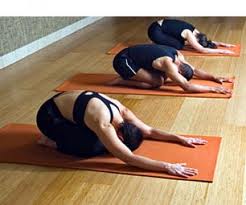
Yoga may not have the same calorie
burning effects of more intense exercises like running, swimming, and
cardio-dance routines, but don't let all that fool you. With its attention to
proper deep breathing exercises and sometimes-difficult poses held for as long
as 1 to 2 minutes, yoga for weight loss is very much a real thing— ask the many
doctors and personal trainers who vouch for it. It doesn't hurt that yoga also
places special attention on improving your state of mind and spirit, leading to
a healthier and better you.
Not all yoga practices are the same,
which is why the amount of burned calories can range anywhere between 180 to
400 kcal an hour. The most strenuous forms of yoga are Vinyasa, Ashtanga, and
other forms of modified "power yoga," which blends strength
exercises, stretching for flexibility, and cardio.
A typical 90-minute Vinyasa class
should leave you drenched in sweat, as the deep breathing works your core,
flushing out toxins and water weight. Repeated upward-facing and
downward-facing dog poses will work your arms, with the effect similar to doing
push-ups.
But beyond the obvious physical and
fitness demands of yoga, there's a deeper benefit to the practice: you become
more aware of your body. You begin to develop an understanding of how your body
works, realize which poses you can and can' execute just yet, and see how
regular practice makes you better at yoga.
You also become more receptive to
your body's needs and even notice things like food that doesn't digest well, or
conversely, food that makes you feel good.
It’s a good habit to write down your
thoughts and ideas after yoga exersecises that improve our brain activity and
mental health too. Meanwhile, if you have some difficulties with writing task,
feel free to order anyquality custom paper from Essaylab.
And yet the interesting thing about
yoga is that not everyone will need the tougher classes to lose weight. Even
gentler yoga practices like Hatha yoga, with its emphasis on breathing,
strength, and flexibility, can jumpstart your body into weight-loss mode.
As you go about your daily, sometimes
stressful, routine, your body is in a heightened state of alert, with
high-octane hormones moving around your body. Yoga activates the
parasympathetic nervous system, which controls your hormones, digestion, and
breathing. This, in turn, brings your body down to a calmer state and resets
injury repair, normal metabolism, and balanced hormone generation—all of which
facilitates weight loss.
And again, yoga is about having an
awareness of your body, with its effects touching on both physiological and
psychological functions. Regularly practicing yoga heightens your sensitivity
to the body's signals, like hunger and food cravings. With regular yoga, you
begin to understand the difference between real hunger and cravings.
Research on long-term yoga practice
shows its ability to stop the middle-age spread. A recent study by the Fred
Hutchinson Cancer Research Center indicates that overweight individuals ages 45
to 55 who practiced yoga on a regular basis over ten years lost an average of 5
pounds—those who didn't gain 14 pounds.
Yoga
An
evolved Sanyasi, however, is also usually a Yogi. The word Yoga means to yoke
or unite, and it is used to imply the means or path by which the individual
soul unites with God.
Yoga is
today confused with physical exercises alone. Actually it includes eight types
of disciplines.
The
first two yama and niyama purify the heart and bring about ethical discipline.
Yama means abstention of all types’ abstention from killing, untruth, theft and
possession of property. It also means the practice of celibacy. Niyama means
observance of purity (both external and internal) and practice of austerities
or tapasya. It includes supreme contentment, thestudy and knowledge of the
scriptures and surrender to the Supreme God.
The
next three, asana, pranayama, and pratyahara are preliminary steps to Yoga.
Asanas are the Yogic postures which, when practised regularly, steady the mind
for concentration and discipline the body. Pranayama are breathing exercises
which improve the condition of the lungs, heart and nervous system, bring about
good health and thereby give a tremendous sense of well-being. They also result
in serenity and steadfastness of the mind without which Yoga is meaningless.
Pratyahara means shutting out all outward impressions from the mind and looking
inward.
The
last three steps are called Raja Yoga and include dharana, dhyana and samadhi.
Dharana means concentration on any one object which could be a light within the
mind or a form or image of God used in prayer. Then comes dhyana or meditation
involving an unceasing flow of thoughts and ideas towards this object. Such
meditation leads to the final state known as samadhi, when the subject of the
meditation and the object become one.
Samadhi
itself involves two steps. The first is conscious samadhi when the Yogi attains
supernatural powers by the strength of his Yogic practices, becomes
clairvoyant, adept at mind-reading and thought-transmission. These powers,
called siddhis, are looked down upon in Yoga, but unfortunately most Sanyasis
never go past this stage. At the same time unevolved persons and the illiterate
masses are completely taken in by such persons because they appear to perform
miracles, promise to cure diseases and to bring material prosperity to those
devoted to them. Such Sanyasis should be guarded against.
The
Sanyasi who ignores such powers and progresses further attains the
superconscious or nirvikalpa samadhi when the mind is in full union with God.
The Yogi in this stage has broken the bonds of Samsara, the cycle of births and
deaths and is verily a liberated soul.
From
time immemorial great Yogis and Sanyasis have been Gurus (or teachers) who have
taught the truths of the Hindu religion and spread its messages to the masses
and to intellectuals, to guide them in matters of the spirit. Some of them have
spread these truths all over the world.
Shri
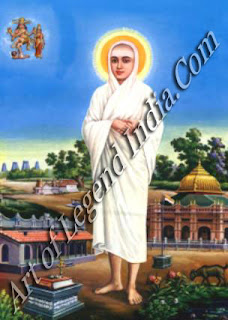
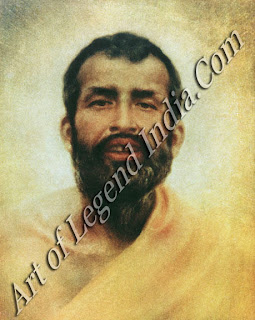
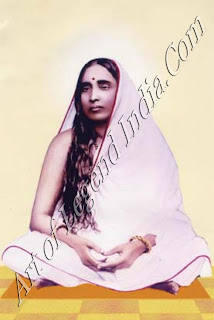
Ramalinga Swami, Shri Ramakrishna Paramahamsa, Sharada Devi, Swami Vivekananda,
Swami Rama Tirtha, Shri Aurobindo, Shri Ramana Maharishi and Swami Sivananda
are a few of the many great souls no longer with us whose spiritual messages,
loud and clear, still guide mankind. Hundreds of Hindu Yogis and Sanyasis are
to be found all over the world today who work for the spiritual progress of our
great land. Whereas there are quite a few who trade on the gullibility of the
innocent, there are several genuinely great Gurus who teach those amongst us
who are totally ignorant about our own religion and guide others towards the
path of spiritualism. To such Sanyasis and their work of spreading the truths
of the Hindu Religion, we should bow in all humility.
Writer
–Shakunthala Jagannathan
The great sage Patanjali, famous for his Yoga Sutra, was born in 200 B.C. He systematized the science of yoga which till then was being handed down by word of mouth from one generation to another. Yoga was very much in vogue in India long before Patanjali's life and work. Since time immemorial the relation of body and soul was being studied by our saints. The most significant question-who am I was being pondered over from the very beginning of human civilization in India.
That constant search made
saints to see, with their intuitive eyes the existence of the Supreme Being.
That led to the birth of yogic science. Yoga is a great ancient Indian lore
going back to thousands of years. Traditionally it is said that Lord Shiva was
the innovator of yoga. Our ancestors spent their lives in search of health and
happiness through yoga. The secrets of yoga were known to Indians before the
advent of Christ. Yoga has been an integral part of our Vedanta philosophy.
Vedas and Upanishads are the ancient scriptures on yoga. In the Ramayana, yoga
is explained and delineated elaborately. The Gita also represents the essence
of yoga philosophy. Lord Krishna, the incarnation of the Supreme Being, teaches
warrior Arjuna the secret of yoga.
According to sage Patanjali
both body and spirit play a vital role in the transformation of the finite into
the infinite. Hence yoga, the oldest science, is the only key to unlock the
mysteries of universal consciousness. Yoga teaches how to conquer suffering,
disease and death. It is a practical way to lead a better life. Through body
postures, rhythmic breathing, concentration and meditation it shows the way to
self-realization. Being a living science, it continues to evolve itself even
today, according to the needs and requirements of the time.
Not
only postures
Time like the flow of a
mountain river changes every moment, but the timeless principles discovered and
the rich experiences accumulated by ancient Indian yogis and earnest seekers
are eternal. They are in connection with our body, mind and spirit. The same asanas,
pranayama, pranic-diet and water, sleep and relaxation that kept the human body
and mind hale, hearty, strong and equipoise in sage Patanjali's times, more
than 2000 years ago, are of the same significance today.
Yoga is not simply a collection
of complicated body postures, but a total living, an eternal source of
scintillating health and happiness. A systematic and regular practice is bound
to add not only years to one's life, but impart a meaningful life to live and
confer various boons on those who follow and practice it sincerely. It is a
living faith. Even a non believer of Hinduism will have the same benefits of
yoga on the physical plane as does a believer but on the higher levels of mind
and spirit faith is an essential requirement. In fact, it is a science, art,
religion and philosophy all in one.
In ancient India all these
branches of knowledge were one and inseparable. Our sages were great men of
religion. It is certainly a religion, but not in a narrow sense. It is based on
certain science values like sanctity and oneness of life, nonviolence,
international human brotherhood, peace and co-existence. In fact yoga makes the
man worthy to be on the top of the ladder of success.
If one follows the yoga principles, practices
the asanas and breathing exercises faithfully, one may surely lead a radiant,
happy and meaningful long life.
There is Karma Yoga for a man
of action. By following your duties selflessly, without any thought of gain or
success, you can sublimate your soul, Gita says, This requires perfect
detachment from fruits of action. This is a path of practical living, of
selfless service, of self-negation, offering the acts and their fruits at the
feet of the Lord. Underlining this path the Gita enjoins; "Work alone is
your privilege, never the fruits thereof. Never let the fruits of action be
your motive, and never cease to work. Work for the sake of Lord, abandoning
selfish desire. This equipoise is called yoga Karma.
Then, there is Bhakti Yoga
which is a path of surrender through love and devotion. In this a devotee sees
the God as the supreme expression and embodiment of love. The chanting of the
Lord's name, singing His praise, worship and ritual (bhajans) are the main
features of this path. It is the easiest and hence the most popular.
Third, Jnana Yoga is based on
the conception of unreality of everything except God. This world of names,
forms and colors is a sheer illusion. All appearances are deceptive. Only God
is the Ultimate Reality. Jnana Yoga or the path of wisdom, is the most
difficult because it requires tremendous moral and intellectual strength. Jnana
Yoga enquires into the nature of everything including himself through discrimination
and determination. Self-realization and communion with God, through the
practice of Jnana Yoga, demands persistent efforts and relentless search.
Fourth, Raja Yoga, or the Royal
Path, deals with breath control, Yogasanas, bandha and mudras. Rajyog is also
known as Hathayog. It's a difficult one and is meant for yogis and sadhus only.
Yoga has been divided into eight parts or eight limbs (Astanga Yoga).
They are:
1. Yama
2. Niyama
3. Asanas
4. Pranayam
5. Pratyahar
6. Dharna
7. Dhyan
8. Samadhi
Full
course

This is the full course of yoga described by
Patanjali. From the age of Lord Shiva this has been followed by Indian sages
and they lived more than 100 years. Asanas (postures) and pranayams are the
sub-divisions of Hatha Yoga or Raja Yoga. Pratyahara aims at the withdrawal of
senses inward in order to still and steady the mind, in preparation to further
and higher steps of Dharna (concentration) and Dhyan (meditation). Dharna leads
to Dhyna, culminating in Samadhi, the ultimate goal of a sage. The need of
yogis is far more greater today than it has ever been. The curative, preventive
and recuperative effects of yoga are well known from the ancient time. In this
age of strain, stress and aimlessness, there is no better remedy than yoga. It
cures various diseases, improves health and maintains it. There is hardly any
muscle or gland which is beyond the reach of asana. The asana, coupled with rhythmic
and swinging breathing, make a perfect tonic for all mental and physical
weakness.
Yoga is for everyone, without
any consideration of caste, creed, climate, country, sex or age. Through it
will is regained to lead a healthier and more fulfilled life. It aims not only
at body or muscle building, but also at regulating and vitalizing the
functioning of all our inner and vital organs, glands and mind. The most of our
body ailments are connected with our mental ill health. To cure a person
physical remedy alone is not sufficient. The mind is also required to be tuned.
A human being is not just a sack of bones, blood, muscles, glands, nerves, etc.
He is far more than that, a rational and thinking being, on the top of the
ladder of the creation.
Writer - MAHARISHI PATANJALI...