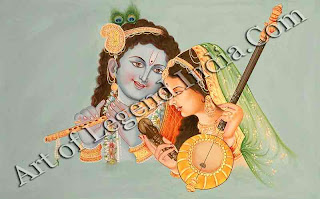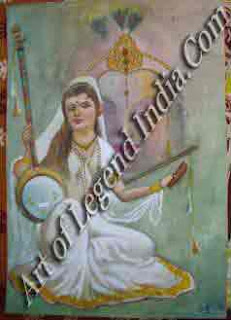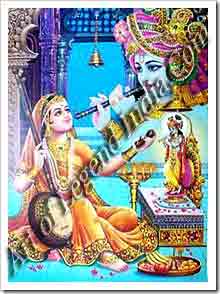
ArtofLegendIndia.com, Biggest Online Store of Handicrafts Items, Paintings and Jewelry Accessories...

Handicrafts

Handicrafts are devices or works of art that are made completely by hand or by the use of relatively simple tools. Such goods are usually made in the traditional way of manufacturing goods. Therefore, the knowledge of the art of craft is usually passed down from one generation to another. The items made using these traditional methods of manufacturing are usually produced in smaller quantities and they often represent the culture or religious beliefs of the community that makes them. The goods are also handmade from natural materials that are found in the environment of the particular economy.

Read More!

Biggest Online Store of Handicrafts Items

Paintings

A painting is equal to thousand words, means a beautiful painting is equal to million of words. Paintings are one of the oldest art forms -- throughout history artists have played an important role in documenting social movements, spiritual beliefs and general life and culture.

History Of Paintings: The history of painting reaches back in time to artifacts from...

Read More!

Biggest Online Store of Unique Style Paintings
Showing posts with label Biography Mirabai. Show all posts

The Doctraine of Sabda

Posted by Art Of Legend India [dot] Com On 4:15 AM 0 comments
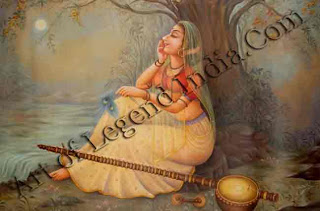
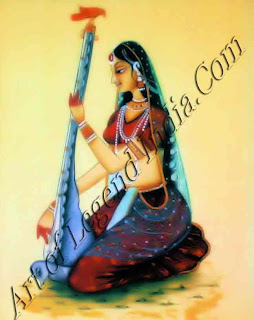
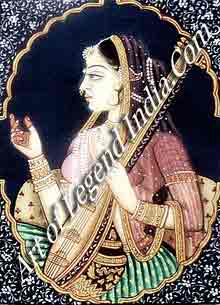
Beautiful Mirabai
In the beginning was the soul merged in the Lord and with the Lord. But since then aeons have passed and the soul has left its abode of peace, where it lay wrapped in bliss. The ignorance persisting for ages, and the association with the grosser elements of matter and ego have covered the subtler element to such an extent that the spirit has apparently become benumbed. In the innermost core it is still alive, but the covers that it has put on have made it insensible to the Call. It has lost its sensibilities, and has become insensate to the shafts of love. They cannot pierce the dense layers the soul has put on. But at times it so happens that, when they do pierce, the experience, howsoever shortlived gives a thrill; but this effect is soon masked by the external reactions. If this temporary selflessness is allowed to sustain itself a little longer, real love will spring forth. These temporary flashes are not of much value to a devotee, not very praiseworthy even. They cannot lead the pilgrim Home. The successful termination of the journey presumes sustained effort and consequent joy.

Once this Bhakti is aroused in this frame, it begins to respond to the Eternal; the soul then starts upwards to the real home.

The soul has since its departure from the eternal Home been enjoying itself with the mind and the body Like the proverbial spendthrift, it is sharing with these cheats the boon of its Home. Like an ignorant child, it has fallen into bad company and is every day descending lower and lower in search of new pleasures of a vulgar type, which makes its redemption impossible. But, before the final wreck comes, it makes amends to the Father, and is forgiven. It then begins its career afresh. It only takes time to rise to the old place once more. This often happens when it is reminded in its fallen condition of its glorious past and is assured of the forgiving nature of the Father. The innate goodness is then aroused in the child. Then it realizes that these thieves the body and the mind which were to all appearances its companions, were really enjoying at its cost, as the soul was the only life-giving element. The covers of depravity are removed, it repents and then the Lord appears and makes it conscious of its fallen condition and of His mighty forgiving nature. This realization is bound to come, as the connection of the soul is yet unbroken with the Lord. When such a stage is reached, the Guru makes His appearance. The Guru knows the secrets of the Divine Path, and understands the malady of the aspirant. He ministers to the ailment of his new patient. To the aspirant he describes his fall and points out to him the path, following which he can reach Home. This path is nothing else but the current of divine love that leads the individual towards the Eternal Soul. If this route were not extant, the individual soul would never experience the thrills from the Universal. The soul, when it lay in the Ocean of Divinity, was lying silent, calm and unruffled; but, when it started its journey downward, the loss of energy in the motion resulted in its depletion, and this process of fall produced sound. This sound is technically termed abda in Vedanta and Yoga. At the various stages in its descent the soul adopted the form and the colour of the centre through which it passed. In our world it assumed the form of `Manas' and `Maya'. If now the soul wants to return Home, it has to retrace its path; it has once more to draw together all the energy it had diffused and then to proceed backwards. Just as in the wilderness in this world the traveller is guided by the sound at a distance, so also the soul on its pilgrimage is guided by the Sabda. It is the open sesame of the Divine Home. 
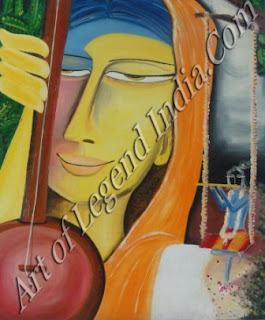
MirabaiThe soul moves on and on in reponse to it. As the sound grows clearer with the soul's advance in its upward march, the speed also increases. Like the snake that gets spell-bound itself when it hears the music of the charmer's flute, the soul drinks deep of the eternal music that issues forth from itself. This music of the soul is also called by the Yogis as Anahata and by the St-ills as Saut-i-sarmadi, the music without a beginning and an end, which never stops. When the music of this world appeals to one so much, one can easily imagine what must be the condition of the soul when it hears this divine music all the time. This music the soul has brought with itself. It sustains it. It is under its influence that the devotee goes into trances. It is the password to reach Home. Mira called this Sabda NAMA'. Without Nama', she incessantly repeated, you cannot reach Him. It is, in fact, the realization by man of his divinity. But this, she repeated, could be possible only through the help of the Teacher. And the Teacher will come only when the aspirant lies ill, crying for the beatific vision. He gives the gift of NAMA', and the path becomes accessible to the recipient.

The love for the Gum must be unadulterated, unselfish and spontaneous. The Guru is he who will open the gate that guards the entrance to the Divine Throne. There must be implicit faith in him. Divided affection is abhorred by him. An honest heart wins him over. How tenderly Mira loved her Guru and with what tenacity, is depicted by her in her beautiful lines, full of pathos and music and brimming with genuine feelings of affection and respect for the Teacher.
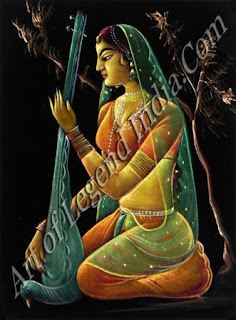
Mirabai
How many are those honest people that have the stern faith and hope in the Teacher? It is very nice to sit philosophizing that the world is a dream. But these are only pious thoughts. The poet is more honest (I say honest, not correct) when he says: 'Life is real' and 'not a dream'. Because he says what he sees But the Teacher will open the devotee's eyes and show him the hypocrisy of the world and its transient nature. It will be only then that in disgust he will turn his back from the world and realize that is was a dream. This hollowness will be shown to him as a stern reality as God was shown to Vivekananda by his Teacher, Swami Ramakrsna Paramahathsa, as a being that 'stood face to face with him and conversed with him.' But one who for ages has been enjoying the wine administered by the body and the mind can seldom get out of the stereotyped rut to breathe the pure fresh air.

The soul in this world has put on covers with which it enjoys when it dives deep into the quagmire of sensuality. It is difficult for it to shake them off. It is only after removing these covers of dirt that it can follow the path of love, so difficult and narrow many are prepared to follow this path with equilibrium and resolve maintained throughout. Although every-one is ready with his gospel and is up to deliver a sermon on the virtues of a devotee's life and the glories of the Path yet very few find the Teacher, still less obtain his favours. On whomsoever he showers his blessings, he takes him in his company, reveals to him the secrets of the Path and leads him Home. That is the beginning of real LOVE, the love that is synonymous with the Lord. The eye sees, with its senses intact, 'camels pass through the eye of the needle' and the 'seas drown in the boat.

To meet the Lord is easy, to discover His lover is difficult.' This is not a truism, but a truth. When the soul proceeds with implicit faith in the Teacher, this automatically happens when the Teacher shows to the devotee his real form, then it reaches Home and merges itself in divinity. Everything it sees there is its own. It dances in ecstasy when it sees its Lord. On one side stands the Teacher and on the other it witnesses the Lord in full effulgence. In a dilemma it finds itself.
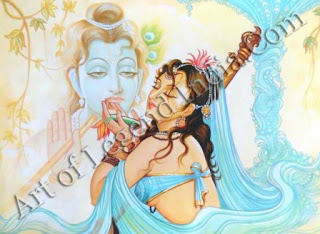
Mirabai
And it falls on the feet of its Teacher, unable to understand its own action and decision. The Lord smiles and clasps the soul to His bosom. It feels the warmth of the embrace. It revives from its slumber and tastes of the eternal life. This is life immortal which it now gets. The way is through the Teacher, who is to impart the knowledge of the abda. There is no other way in this Kali age. Prepare for His arrival; for, sooner or later, He is bound to come. You are to be equipped, not with the riches and the wealth of the world, but with a poor man's heart, a heart that will burst forth into tears of joy at His name and in which the waves of love are constantly rising, leaving no space for any other love besides that for the Holy One.

The inception of love is the result of the ascent of the accumulated energy upwards. The way upwards is through the Guru.

Mira was imbued with similar feelings. She cried, "Take the torch of `Guru-Thana' and steer clear through the abysmal darkness of the world." What she said will be understood only by those who have passed through the path traversed by that great devotee. The fidelity required in this domain is too taxing, nay, boring at times, for the soul that has started suddenly and with great vigour at the very outset. It staggers at the first shock it receives, as it is yet raw in the sense of lacking in the support of the Guru. But, when the Guru is met, the watchword of the soul is "Always with the Guru." This is the sign of emancipation, and, sooner or later, every soul must crave for the divine support. Then redemption is not far off. Else, like the many, it also finds a place in some abyss. The onlookers have watched with careless eyes the wrecking of many boats, but they have never cared to diagnose the cause. The phantom of death, as the dear ones have been carried on the bier, has haunted them only for a moment. The realization has been short-lived. The attention is carried again to the wrangles of the world, and once again the soul is drowned in the sea of pain and pleasure, steeped in the desire of the world, in its joys and in its sorrows. The momentary flash does cross at least once everybody's life, and many a pious resolution is then arrived at, and solemn promise made thenceforth to follow a course that may lead Home. But their unstable position soon wrecks them on the rocks of worldliness. When once caught in its meshes, no amount of frowning or fawning will avail them. But even then, if he were to realize the greatness of the soul and follow its dictates to the last, there is every chance of redemption. The Teacher will give the devotee the strength to fight the blandishments and snares of Maya and Kala and ultimately tow his boat unperturbed through the gushing current. Few realize the boon the Teacher confers although everybody is familiar with the prevailing practice in big households. The entry there is regulated by permits. It is therefore not a matter for surprise that the divine preserves should be protected by these saints, who act as the repositories of divine secrets, mysteries and knowledge. If the Cela is ready, he whispers the password, and with its help the aspirant reaches the unexplored region.

MirabaiThe Guru tells how the descent began and the agonies of the soul commenced. He knows it, as he has the experience of that region. When the ingress into the region of darkness has been through doors of pain, the way back must surely likewise be decked with wreaths of tears, not burning tears this time, but the soothing draughts that quench the thirst of the soul. Seeing the wilderness in front and the uncertainty in the result of the espoused cause, the tiro does not grip the opportunity offered to him, but allows himself to be washed with the downward current into the region of abysmal darkness. The proverbial laziness in man, coupled with his love for pleasure does not permit him to steer through and beyond the rushes of Maya. He is afraid of being drowned and desires to come out unbruised. Thus, when a beginner finds after some time that the path is too difficult for him, he abandons it immediately. Thereupon the sparks of renunciation convert themselves into strong chains of worldliness, thus preparing the way to Hell. The solitary stars shine in the firmament of time; while some have persevered and others have sneered, the devotees have worn expectant looks. They have sat helpless and penitent, awaiting the motherly touch to come and take them up. And the mother has come. Their hopes have not been frustrated. The Teachers have come and opened the portals for them. There drinks the soul the nectar of bliss, unable to find words in which to express gratitude to the Teacher. In no words can it pay tribute to him, the repository of the GREAT MYSTERY, who unlocks the mysteries that lie unfathomed in the recesses of the heart.

Writer – Bankey Behari

Songs of Mirabai

Posted by Art Of Legend India [dot] Com On 2:38 AM 0 comments
Dear One come and bestow

Mira Sing SongDear One come and bestow Thy vision
on me.

Without Thee, 0 Love! I cannot be.
As the lotus without the water, as the
night without the moon,

So do I Thy maid. feel without Thee,
Troubled and distracted, I move about
night and day long,

While the pangs of separation gnawe at
the heart.

The days pass without hunger, and the
nights go without sleep.

When the words do not come out of the
lips;

What can I ‘then complain about, without
speech.

Except Ye. O Lord, what other hope can I
cherish.

Come, soothe this burning heart.
Come, be kind and meet me. O my Master.
Mira, Thy maid of ages,
In supplication falls at Thy feet.


Now You have to protect me.

 
Mirabai
Now You have to protect me.
For You have accepted me as Thy bride.
The Powerful One, in You I seek my
refuge,
 
Pray let all my works be accomplished.
Vast is the ocean of the world, beyond
me to negotiate,
 
You alone are my ship, for me to cross o'er.
Of the supportless, You are the support,
0 Teacher of the World,
 
And without Your aid every work of the
world is ill-performed.
 
Through ages the pain of Your devotees,
0 Hari, You have allayed;
 
And on the world You have conferred
salvation;
 
Mira seeks shelter in Your lotus feet,
Protect her honour now, 0 Lord.
 
 
Writer – Bankey Behari 
 

In Quest of the Flute - Player

Posted by Art Of Legend India [dot] Com On 4:16 AM 0 comments
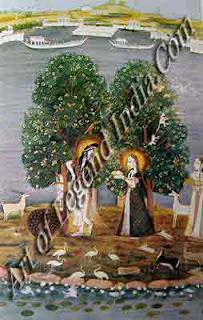
Mira Imagine to KrishnaMIRA started for Brindaban, singing and dancing in the way as she passed. As she crossed the burning sands of Rajaputana, her face did not betray any sign of physical pain or suffering. All the way nothing came to her lips but "Giradhara Gopala : He is my all, I have no one else to call my own."

Whoever saw her was peculiarly moved, and everybody was drawn towards her. The heart of the poor was filled with sympathy for her, and they requested her to share with them their unostentatious meals. The children took her to be their mother who had for long been away from them. She, on her part, clasped them; for she saw in them so many Krsnas. Her touch was magical, and her look captivating. Everybody wanted her blessings, and returned overjoyed after seeing her with the Lord's name on her lips. It was apparent that the Lord, taking compassion on them, had sent them His own child as the messenger to deliver them His message the secret of divine bliss. They would not let her part. But to her the Lord's mandates were supreme and she would waste no time in answering the Divine Call. She therefore went on and on for days and nights, cheerful and unfatigued, till she reached the suburbs of Brindaban. There, as if by intuition, the cowherds' children recognized her, ran to her and, forgetting all decorum and decency, kissed her, raised her up and cried out, "Come, friends, she has come." 

They had recognized the Gopi that had been absent from Vraja for so long. She reciprocated those sentiments of love thus showered upon her; for, were they not the genuine outpourings of affection and the fragrant draughts of pastoral love? They forced her to dance, and, when they felt she must have been tired little did they know that those feet knew no tiring they gave her fresh milk to drink and the piece of the loaf that was lying in the cupboard. They brought her water and cleansed her feet, and in the midst of such exuberance of affection she lifted her head to see who it was that was playing those touching tunes that enraptured the heart and sent a quiver through it: and whom else would her eyes meet but the Lord Himself, seated on yonder tree, witnessing His own Lila. As she ran to catch Him, He disappeared. Mira lay weeping, and the children started consoling her. After some time she recovered and started on her journey in spite of the children's vain entreaties to stay for some days more.

MirabaiHer eyes could not be arrested by any other thing in the world except the purpose in hand, and that purpose was none else but the love for the Lord, and that mission no other than the journey to His abode. Thus, nothing, not even the children's entreaties, howsoever feeling, could divert her from her purpose, which was to meet the Lord at Brindaban. At last the journey was over and she reached the place and there fell in a reverie. In her dreams she looked about herself and seemed to recognize the old place. She remembered the good old days when she had with other Gopis played with the boy Krsna, danced with Him and had been the butt of all His jokes. She remembered that she was Radha in her previous birth and had adorned the place and taught the womankind the ideal of selfless love for their consorts. She awoke from her reverie and found herself entirely amongst new surroundings. She tried to find the old places. They were all gone, and huge buildings stood in place of lovely bowers where His dramas were enacted by Lord Krsna. She went about and rested in the temple dedicated to the Lord. As she passed through the streets, people laughed at her. Careless of the caustic remarks, she went on intuitively.

As evening approached, she went out to beg for food. Having got some, she took it to the banks of the Jamuna, offered it to Lord Krsna and partook of it. During night she sat in prayers, her little Krsna before her, and passed hours in devotion as usual, careless of the new surroundings. To her there was nothing new. It was a return home, and not a streak of care was visible in her face. There she sat all aglow with divine fervor. She had not long to stay. Like the moths that surround the lamp, devotees began to gather about her. The news spread all round that Mira had come. All seemed to recognize her. Her name seemed to be familiar to everybody. News spread far and wide that the Lord Himself visited Mira while she sat in devotion and danced in ecstasy. People started on the holy pilgrimage to visit her. This news also travelled to Chitor, and devotees arrived from there and begged Mira to return to her native place. Since her departure from there they had suffered great troubles. The Rana himself realizing his folly repented, and dressed like a mendicant, came to Brindaban to seek her forgiveness. Clad in saffron, he approached Mira and asked her for alms.

MirabaiMira: What alms can you expect of a beggar!
Rana: You can give me whatever I want.
Mira: Then ask.

At this, the Rana removed his disguise, disclosed his identity and sought her forgiveness. Mira recognizing her husband fell down at his feet. She acceded to his entreaties, and consented to accompany him back home.

On arrival in Chitor her time was passed in prayers in the temple. This continued for some time. Bhojaraja died while Mira was only twenty-three, and only ten years had elapsed after her marriage. She now felt more at liberty to carry on her devotional practices. But soon things changed, and, at the instance of his counsellors, Ratan Singh, the new Rana of Mewar and Mira's brother-in-law, started persecuting her. Mira bore patiently all the humiliations to which she was subjected, in the name of the Lord, and uttered not a word of complaint. Who could know what she was, what she wanted and what she did! Her feelings are expressed in her own lines:—

O friend, I am mad with love: none
knows my anguish.
There, on the point of the pike lies my
bed, how can I sleep!
The bed of the Dear One is spread in
heaven, how can I meet Him !
Only he who has a wound can
understand the condition of
the wounded,
Or else he who has dealt the blow.
Only a jeweller can know the secrets of
a jeweller or else he who the jewel be.
Smitten with pain I roam about the
forests,
Physician I have found none.
The pain of Mira will leave her,
0 Lord, when You play the physician.

Mira and Krishna
The persecution of Mira continued day and night and she was ridiculed for mixing freely with the tonsured mendicants and for dancing before the Lord's image. She was asked to give up this dancing and singing as it cast a shadow on the fair name of her family. Her characteristic reply is contained in her following lines:-

Mine is Giradhara Goma.la, none else.
He who wears the peacock crown is
Mira's Lord;
Father, mother, brother or kin, none
is mine,
I have flung the pride of my family:
what care I for any one !
Living in the company of saints, I
bade good-bye to the world and its
opinions,
I tore aside my veil of many hues and
bedecked myself with coarse thread;
Pearl and corals I cast aside to weave
the garland of wild flowers.
With my tears for water, I nourished
the creeper of love;
Now that the creeper has spread, the
fruit shall be joy itself.
The milk-churn I twirled with deep
emotion,
And butter I gleaned : let him who
would, have the leavings.
I was born for devotion's sake, but
the sight of the world made my heart
captive.
Mira is Thy maid, 0 Lord Giradhara;
save me now.*
How could such a child be loved in this world!
All sneered at her, but she did not care. Her heart aimed at pleasing one and one alone, and that was the Lord Himself.

Mirabai Find GodThe Rana was always busy inventing a new form of torture for her. Once he sent a snake in a basket to her with a message that it contained a garland of flowers. Mira, after performing her ablutions, sat before it. On opening it she discovered a beautiful image of her Divine Beloved.

The Rana then tried another trick. This time he sent her a cup of poison, saying it was nectar. Mira, after performing her prayers, raised it to her lips and quaffed the deadly liquid, which was really transformed into nectar. She has described these incidents of her life in the following beautiful song :-


Rana made a present of a basket
of serpent.
Mira performed her ablutions and put
her hands in it.
Lo! it was turned into an image of
the Lord.
Rana sent a poisoned cup: having
performed her
Prayers, Mira drank of it.
It had changed into nectar.
Rana sent a bed of nails for Mira to
sleep on.
Evening fell and Mira slept on it.
Lo! it had transformed into a bed
of roses.
Mira's Lord, ever beneficent, keeps her
ever out of all trouble.
Mira has dedicated herself to Giradhara
and roams about in ecstatic mood
arising out of deep love.

The mystery behind these miracles can only be explained by her love for the Lord.

Mirabai in Isolation
Steeped in the wine of love, the lover sees nothing else but the wine all round. The whole panorama is dyed red. The very wine seems to pervade and fill the atmosphere by its fragrance. The whole consciousness is gone. Nay, the devotee himself becomes symbolic of it. Everything that he takes smells of that wine. His love is responsible for that conversion.

When she was thus tortured and troubled at her place, and when it became impossible for her to carry on her devotional practices, she sought the aid of one who could understand her condition. She addressed the following lines to a renowned contemporary saint, Tulasidasa:—

All the dear ones of my household
ever create trouble
Over my association with the Sadhus,
and in my devotion cause
me intense pain.
From my childhood have I made the
child Giradhara my friend.
The bonds of attachment have grown
too strong for me now to break.

Mirabai
Tulasidasa gauged her mental agony and physical pain and came to her rescue. He replied thus:— 

Those who do not hold Rama and
Sita dear,
Shun them as your dire enemies,
howsoever closely related.
Prahlada defied his father, Vibhisana
deserted his brother and Bharata
forsook his mother.
Nay Bali disowned his preceptor
And the Gopis left their husbands in
order to meet the Lord, and the
behavior of them all was a source
of happiness and a blessing to the

Writer -Bankey Behari

Mirabai story : On The Errand of Love

Posted by Art Of Legend India [dot] Com On 3:06 AM 0 comments
Mirabai

ON THE ERRAND OF LOVE

Shrouded in melancholy that day, the devotees watched with anxious eyes the parting of their beloved, the soul that gave them joy and blessed them with the sight of the Lord, now going with a divine message to meet the Lord from whom she had been living apart for so long. Born in the race of the Rajaputas, whose women boasted of the custom of `Jauhara' and who had for their ideal unshaken fidelity to their husbands, she showed to the world that she would stand by the behests of her husband, implicitly obeying them, however terrible the consequences might be. This she felt was the ideal of a wife in Hindu society, and she wished to be no exception to it. Prompted by the idea of obeying the mandates of the Rana, whose ignorance and hauteur were responsible for such a hasty and foolish order, the servant for, so does every Hindu wife delight to call herself made her way towards the river, which was to become holy by the last embraces of the Lord's devotee who had come to offer her holy frame to it. And, as she started on the pilgrimage, she bent low to her cherished idol, pressed it to her bosom, then individually caressed her companions, that had shared the joys and pangs of the nightlong vigils, waiting for the coming of the Divine Bridegroom, and borne ungrudgingly the ridicule of their masters. For the last time she sang those beautiful songs that had brought solace to many a bruised soul and pacified many a broken heart the very songs that have been sung by many a pilgrim on the path that leads Home. The meeting over, the farewell approached, after which the pilgrim started. This time the beloved idol lay not in a temple made of brick and clay, not within the structure that could be the boast of human agency, but in the temple of the heart, on a safe pedestal which the great Architect had prepared for Himself. Thus she started, with all her thoughts fixed on one object, that object being none else than the Lord Himself.

Mirabai With KrishnaToday the world's scaffold was again to be smeared by the sacred blood of the great devotee of the Lord. The martyr's tomb was again to be erected on the soil of this ungrateful world. The world's ingratitude was again to be painted on the canvas of the Universe. The lessons of their forefathers' sins were again to be taught to their descendants. Her tormentors the blind knaves did not realize that they were in sheer ignorance perpetrating once again the heinous crime those centuries before had been enacted by their brethren on a different stage and in a different clime on the Son of God.

The world seems to rejoice in such devilish acts of her sons. It seems to grow fat on the blood spilled of such pure souls, else how to account for these inquisitions and tortures that mark the advent of every holy saint! These are the murderers who wish to stifle the spirit that seeks to emerge forth from below the covers of dirt and mud that it has taken over itself by ages' sleep, by drowning itself in the quagmire of sensuality. Little do these people realize that these manifestations of divine love in Bhaktas are not the expressions of a maniac, but are the dramas enacted by His own children on the unholy stage of the earth to purge it of its sins and serve as object-lessons to the many yearning devotees that pray to the Master for help. Their acts are not the hallucinations of a madman, but they are the vital sparks of eternal flame for ever ablaze. It is a queer tragedy of human life that the two the Lord and the Satan should exist side by side in the same castle. But it is a stern reality. Reality must play in the lap of unreality. The servant, however rebellious, has by years of devotion to the Lord earned for himself the boon that he should be permitted to carry on his work of mischief unbridled amongst the impostors. But when he exceeds the limits prescribed, the Lord Himself comes to the rescue.

MirabaiIn this burning ghat there is a temple, and therein sits my Lord. For what else should one call this world where the choicest jewels in man love, beauty, chastity, dignity and fortitude lie smothered at the hands of these fiends in the shape of hatred, anger, desire and pride. But there is the solace that, when untold misery becomes rampant, He comes:

 "Whenever there is decay of righteousness, 0 Bharata, and there is exaltation of unrighteousness, then I myself come forth."

 "For the protection of the good, for the destruction of evil-doers, for the sake of firmly establishing righteousness, I manifest myself from age to age."

The mischief of Satan is proverbial. Here it appeared in the form of wrath in the Rana, who denounced the beloved Mira and gave her the peremptory mandate "drown thyself in the river and never henceforth show me they face." How patiently she bore the verdict! Fully did she follow the divine lovers' practice to show forbearance under torture for the sake of their Beloved to a degree unsurpassed in human history? Complete surrender of the body and extreme recklessness about it and laying it down at the altar of love is considered as the highest form of sacrifice in the world. But the Lord's devotee has yet a higher ideal.

Mirabai
He considers the sacrifice of the body as the lowest order of offering, the devotee can make to the Lord. The standard with which the actions of the two are to be judged is, therefore, different. In the sphere of the world it is apparent that the beloved must be convinced that the lover has genuine affection for her, while she on her part must display rank carelessness in respect of her body and abhorrence for the rules of society. If such tests are applied in the base worldly love, what finer tests must not an aspirant in the region of divine love volunteer himself for; what fiery ordeal must he not pass through; what agonies must he not patiently bear before he can cross the threshold and get entrance into the portals of that more sublime region where love reigns supreme and the pleasures of which place know no surfeiting by excess. No mathematical calculation can give its idea; no formula can explain it. From her youth Mira- had been equipping herself for this region. She had experienced that the meeting had drawn closer; and as she wended her course towards the river, a beautiful smile played on her lips, and with the same old melody she sang old songs in her characteristic joyous tune, but this time with a greater vigour, as she was conscious that she had been freed from the physical bondage. In her ecstatic mood she would jump high in the air and cry out "Govinda, Govinda, Govinda," and sometimes she would weep and repeat "Govinda, Govinda, and Govinda." Thus she reached the river wherein she was to drown herself in compliance with her husband's wishes. There she stood on the banks of the river, a statue in meditation, resplendent in its virginity, enrapturing in its dignity and shining in its glory. All the elements seemed to stand in awe, while the bosom of the river heaved visibly, none could say why whether in joy at the thought of her receiving a celestial being into her lap, or in sorrow at the ingratitude of the world, at its subjecting such a fair creature to physical pain. MirĂ£ stood in a contemplative mood, thinking of the distant regions. It was now evening and the sun shed its last rays to kiss the feet of the universal beloved and then went low, not to rise again for the day. In an instant the conch and bells started their music in the temple in the distance. At their sound Mira was reminded of her hour of worship. The thought of sitting for devotion irresistibly came into her mind. She looked for a seat, and at once felt that the best place was the lap of the Lord Himself. There was no time to waste. With all the vigour at her command, she prepared to jump into the river, and, as the feet were just about to leave the ground, a hand from behind grasped her. Mira looked behind and whom else would she see but her beloved ri Krsna, who stood smiling at her in His proverbially childish fashion. Mira fainted. She had found the lap of the Lord, as she had desired, wherein to pray, as the evening had approached and the hour of prayer had come.

Mira opened her eyes. The Lord smiled and said, "Your life with your mortal husband is over. Now you are mine. Go now and henceforward seek Me in My kingdom in the bowers of Vraja and in the lanes of Brindaban. A final clasp: a last embrace: now I go. Watch how I fly!"

Writer - Bankey Behari

Company Overview

Art of Legend India has the distinction of being one of the best in the Indian Handicraft Industry. We are about 75 years old handicrafts manufacturer & exporter. We are having team of more than 500 craftsman.

We are having our business offices in India, USA & Germany to ensure our best services.

Total Pageviews